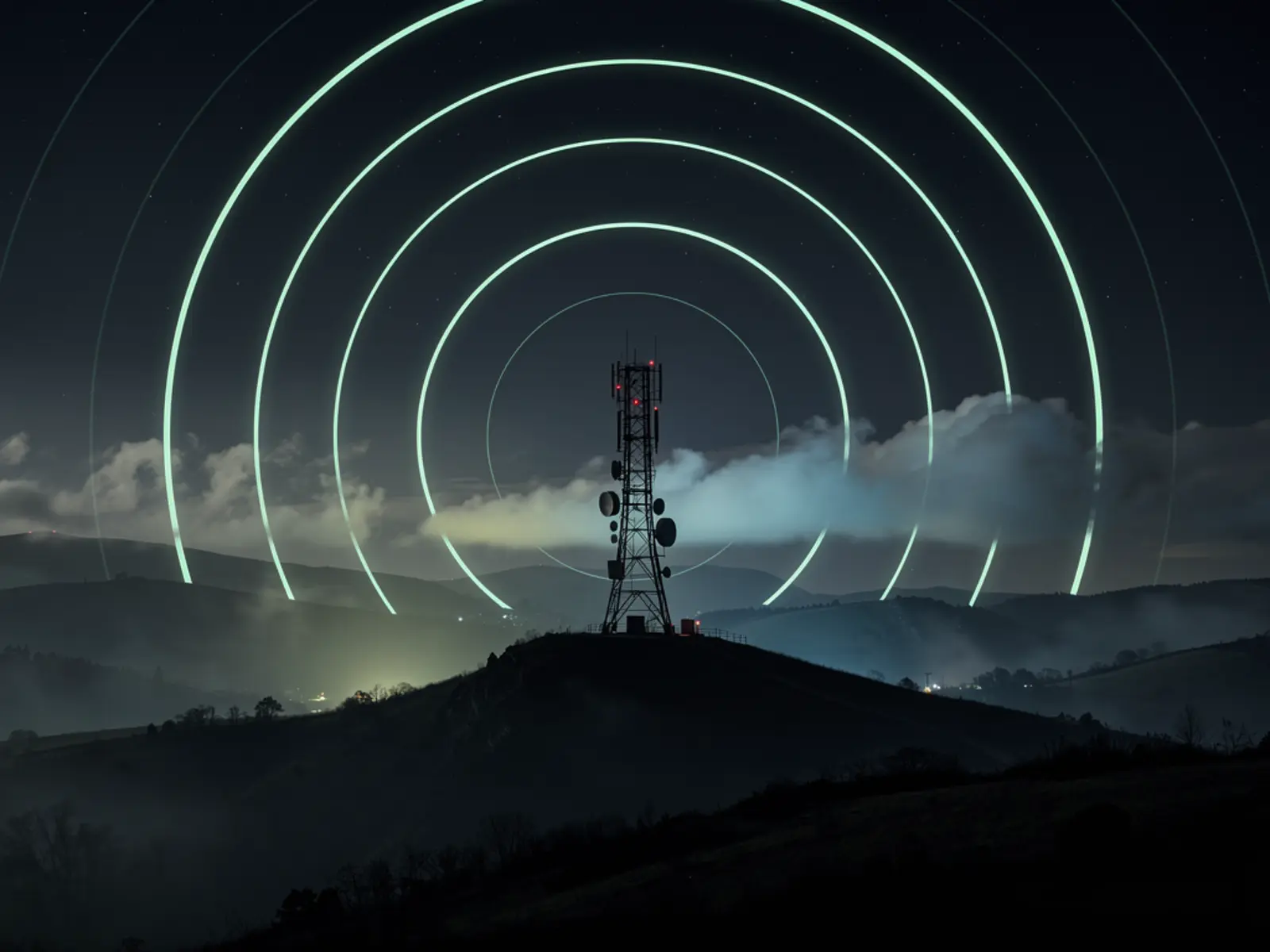
The idea
Establish a reliable local text link between two endpoints through one elevated repeater. The first deployment proves coverage, energy autonomy and maintainability. ThrowPods, multiple repeaters and emergency-service integration remain later extensions; a prototype mesh must not be represented as guaranteed emergency communications.
The connection
Radio, terrain and off-grid power are designed together. Coverage is a physical problem; autonomy is an energy problem. A credible network has to solve both.
How it could work
Choose one firmware ecosystem and a documented supported radio board for the pilot. MeshCore and Meshtastic are distinct systems; shared LoRa hardware does not make their application protocols interchangeable. Record firmware revision, radio parameters and node role for all three pilot devices.
Treat the radio link and solar power as independent experiments. Establish coverage using controlled power before sizing a permanent solar node. Elevated placement may help line of sight but requires a practical mounting, access and retrieval plan. Antenna gain, cable loss and transmitter power must be considered together when checking current New Zealand licence conditions.
What would prove it
Send 100 numbered messages in each direction at a restrained, licence-compliant cadence across the intended route. Log delivery, latency, radio signal indicators, retries, weather and node location. Repeat at different times. Separately run a 72-hour no-charge energy test with the intended repeater configuration and log voltage/current.
Proposed gates: at least 95% delivery on the defined test route, no reboot loop at low battery, orderly recovery after power returns and sufficient measured energy reserve for the chosen autonomy target. Failure should trigger placement, antenna or power redesign before more nodes are bought.
The path to a complete build
- Confirm access permission and site constraints; verify the applicable current radio conditions.
- Prove a three-node link and save a repeatable configuration.
- Measure consumption and obtain winter solar assumptions for the actual site.
- Bench-test the enclosure/power system, then perform a supervised outdoor soak test.
- Record maintenance interval, firmware recovery, battery replacement and a retrieval plan before unattended use.
Open the engineering notebook
Components, interfaces and calculations
Pilot BOM: two companion endpoints, one supported repeater board, antennas/cables, regulated supply and a logging arrangement. Permanent node additions are a chemistry-matched solar controller, protected battery, panel, fusing, weather enclosure, cable glands and mounting hardware. Verify the existing USB solar panel's voltage and behaviour under low light before relying on it.
Daily load Wh = measured average W × 24. Battery nominal Wh = daily load × desired no-sun days / (usable fraction × conversion efficiency). Example only: a 0.25 W load uses 6 Wh/day; three days at 80% usable capacity and 90% conversion need about 25 Wh nominal storage. This does not size the panel: use site-specific winter irradiance, shading and recovery requirements.
Scope and development questions
Plan 4–6 bench sessions plus field visits and the soak test. Price radio equipment separately from mounting and weatherproof power hardware. Resolve route geometry, site shading, antenna height and required no-sun days. Do not publish precise private node locations by default. The useful deliverable is a coverage and energy report, not an untested range claim.