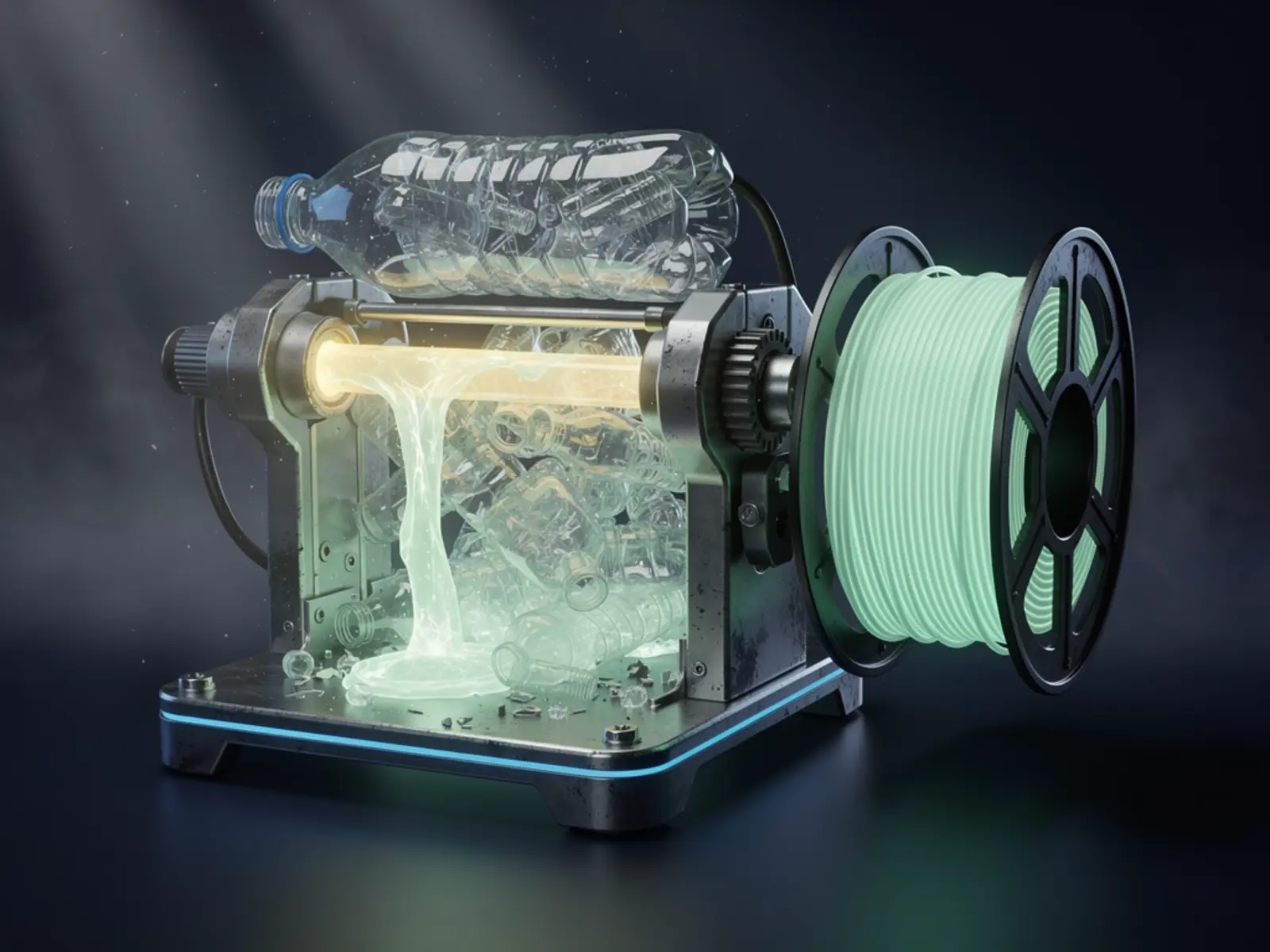
The idea
Produce a small batch of traceable recycled filament that can complete a repeatable print test. V1 uses one clean, identified polymer and one processing route. PET bottle-strip pulling and shredded-plastic screw extrusion are different processes; combining them into one assumed machine obscures the real engineering work. Mixed failed prints are not a valid undifferentiated feedstock.
The connection
The project closes the gap between recycling an object and producing a material another machine can trust. Process control and measurement determine whether the loop really closes.
How it could work
Begin by proving material preparation and diameter control, then automate winding. Separate feed preparation, drying, melt processing, cooling, measurement, pulling and winding. The puller sets line speed; the spooler should follow under controlled low tension. Using spool torque as the primary diameter control creates variation as spool radius changes.
Use a guarded, documented extrusion or pulling system with independent over-temperature protection. An ESP32 can log and supervise the process, but it should not be the sole means of preventing a heater fault. Match processing and drying conditions to the actual polymer documentation; do not invent a universal temperature for all recycled material.
What would prove it
First produce 20 m of continuous filament from one identified batch. Measure both axes at fixed intervals, note bubbles and brittleness, and compare against a known commercial control. Then print the same small test geometry from each using the same printer and a documented material-appropriate profile.
Proposed gate: measured diameter stays within a chosen 1.75 ± 0.05 mm development window, no sample shows a severe local bulge or brittle break, and three consecutive test prints complete without feed-related jams. This is a screening gate, not certification of mechanical properties or a universal printer tolerance.
The path to a complete build
- Pick bottle-strip pulling or single-polymer extrusion and document why.
- Prove clean feedstock preparation and thermal stability.
- Characterise diameter versus pulling speed before adding feedback control.
- Add a spooler that does not disturb the puller; run the 20 m test.
- Publish batch logs, diameter plots, reject rate, energy and comparative print results.
Open the engineering notebook
Components, interfaces and calculations
Required capabilities include sorting/cleaning, a polymer-appropriate dryer, controlled heating, stable feed/pull mechanism, cooling path, calibrated two-axis diameter measurement and winding. A micrometer is needed to check the sensor's readings. Record feedstock source, mass, contamination observations, drying history, thermal settings, line speed and spool mass for every batch.
Measure diameter in two perpendicular directions to expose ovality. Cross-sectional area scales with diameter squared, so a modest diameter error can change delivered material volume significantly. Track usable output divided by clean feed mass as yield, and energy per usable kilogram; recycled material is not automatically cheaper after labour and rejects.
Scope and development questions
Allow 8–12 sessions plus machine procurement or fabrication. Separate costs for guarded processing equipment, measurement, drying, extraction and consumables. Resolve feedstock volume and whether the aim is waste reduction, material experimentation or lower cost. Stop if the selected stream cannot be kept chemically consistent or the product is too variable to print reliably.