The idea
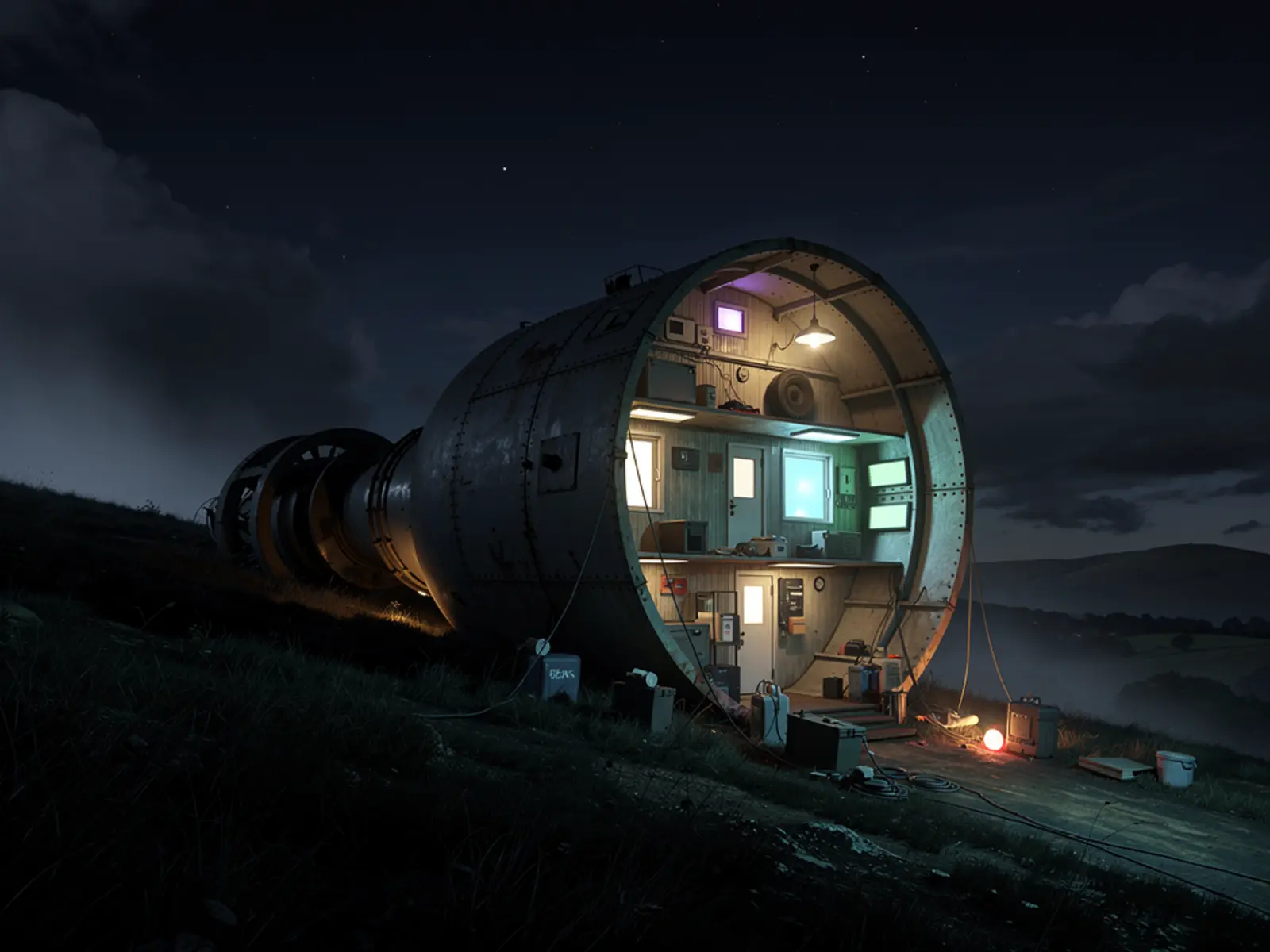
Determine whether a specific retired wind-turbine nacelle shell has a viable second use. V1 is a documented feasibility package for one identified shell and one proposed site. A radio equipment shelter and an occupied maker pod are different projects; choose the unoccupied equipment option first if the shell's condition and access support it.
The connection
Industrial reuse is a design opportunity with real constraints. The project asks which new purpose can justify the transport, structural and environmental work a retired shell requires.
How it could work
Treat the shell as an unknown asset until records and inspection establish dimensions, mass, material condition, contamination and approved lifting points. Transport, lifting, foundations and access can dominate the project even if the shell is free. A digital render cannot resolve those constraints.
For an equipment shelter, prefer an independent internal equipment frame so loads do not depend on unverified shell strength. For an occupied pod, egress, fire performance, ventilation, moisture, accessibility and structural design require a separate professional assessment. Do not cut new doors or lift an undocumented shell as a feasibility experiment.
What would prove it
The first proof is a full-size internal-layout mock-up using tape, lightweight frames and the measured shell envelope. Demonstrate equipment access, cable routes, drainage and replacement clearances without occupying or modifying an unassessed shell. For a radio hub, separately run the radio/solar prototype in a normal enclosure.
Proposed feasibility gates: a named shell and site are available; professionals can identify a feasible transport/lift and structural approach; equipment remains accessible; a comparison budget fits the user's explicit ceiling; the authority's required process is understood. Any unresolved lifting or structural issue is a no-go for physical relocation.
The path to a complete build
- Select one shell and one site, then obtain records and condition assessment.
- Choose unoccupied equipment shelter or occupied space and freeze that boundary.
- Obtain transport, foundation and regulatory advice before detailed styling.
- Validate the intended equipment system independently and make the layout mock-up.
- Publish an options report with quotes, unresolved liabilities and a go/no-go recommendation before commissioning works.
Open the engineering notebook
Components, interfaces and calculations
Collect owner permission, serial/model information, decommissioning records, measured dimensions, photographs, inspection findings, site constraints and a transport route survey. Obtain written scopes from a competent transport/rigging provider, relevant structural specialist and local authority as appropriate to the proposed use.
Compare total installed cost against a conventional enclosure: acquisition + assessment/decontamination + loading + transport + foundations + anchoring + fit-out + services + consent/design + maintenance + eventual removal. Put uncertainty ranges against every unquoted item. Reuse is not automatically cheaper or lower-impact once movement and remedial work are included.
Scope and development questions
Allow 3–5 planning sessions plus inspections and external quotes; no credible construction schedule exists yet. The major unknowns are availability, actual mass, hazardous residues, remaining shell life, site access and approval requirements. A successful project may conclude that reuse is unsuitable for this site; that is a useful evidence-based outcome.